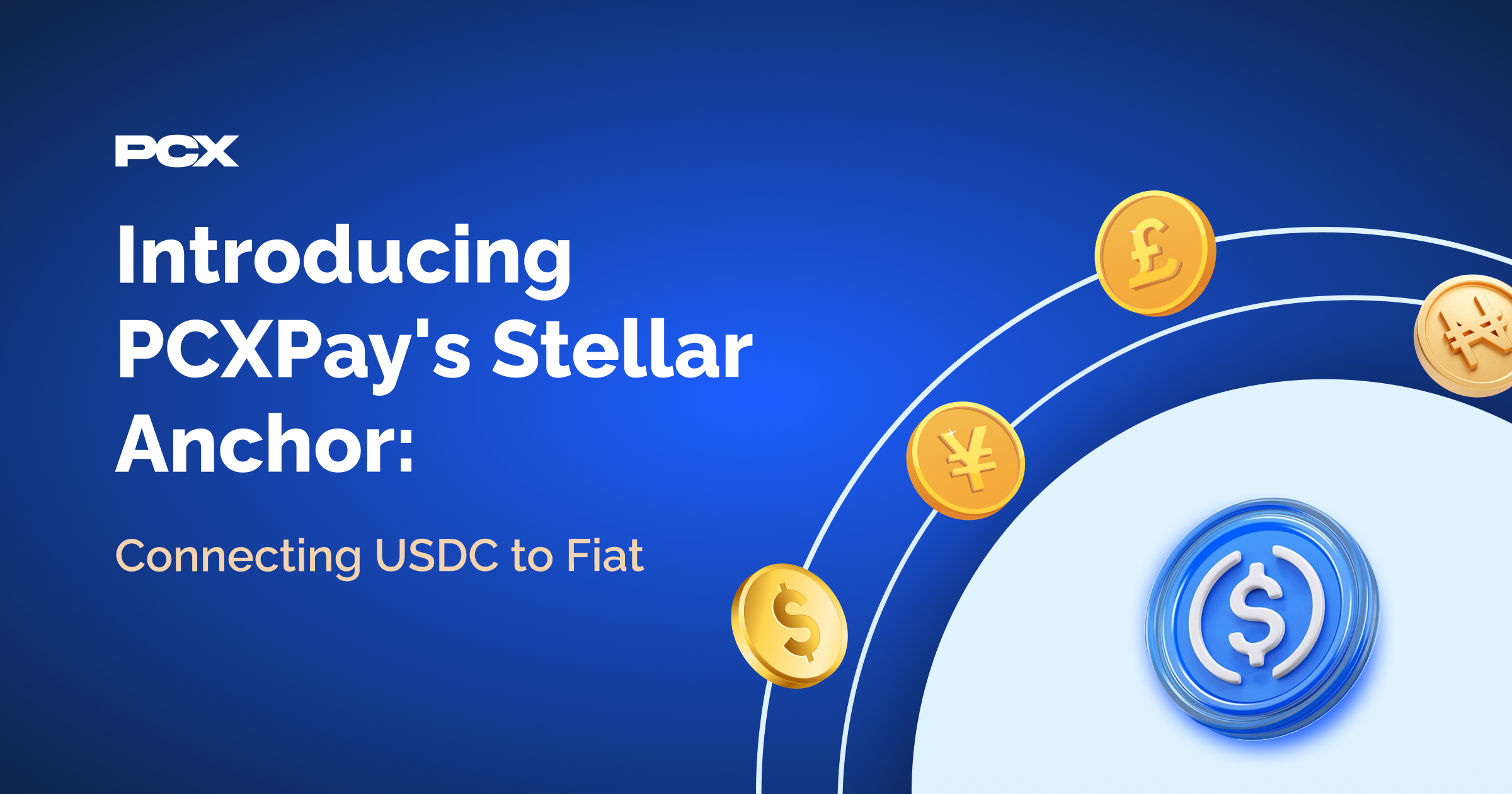
Introducing PCXPay's Stellar Anchor: Connecting USDC to Fiat
A wallet can hold USDC. The bigger question is what happens when that value needs to become usable money.
That is where PCXPay's Stellar Anchor comes in.
PCXPay is introducing a regulated Stellar Anchor that connects USDC on the Stellar network with local and international fiat currencies through PCXPay's existing conversion and banking infrastructure.
The initial rollout supports USDC on Stellar and enables conversion into and out of NGN, KES, GBP, EUR and USD.
For customers, this means the journey does not have to stop at the wallet.
It can continue into the financial systems they already use.
From USDC to usable fiat
Moving USDC across the Stellar network is one part of the payment journey. Converting that value into fiat and getting it into a bank account is another.
A customer may hold USDC in a Stellar wallet but eventually need that value in naira, shillings, pounds, euros or dollars. A business may need to convert stablecoin holdings to pay contractors, manage operating expenses or make cross border payments.
The Anchor provides the connection between these two worlds.
PCXPay's Stellar Anchor follows Stellar's established standards for authentication, customer information and deposit and withdrawal flows. Once connected, customers can complete the required verification, select their currency, review the applicable conversion and fees, provide their payout details and complete the transaction.
Behind that experience, PCXPay's existing infrastructure handles the conversion and banking settlement.
In simple terms:
Stellar handles the movement of digital value. PCXPay connects that value to the fiat financial system.
Why this matters
Stablecoins are increasingly being used for payments, treasury management, international transfers and digital disbursements. But businesses still operate in a world where employees, contractors, suppliers and customers often need to receive and spend fiat currencies.
That creates a gap between holding digital value and using it in the real economy.
PCXPay's Stellar Anchor is designed to help bridge that gap.
For businesses building on Stellar, this can create a simpler path from USDC to currencies such as NGN, KES, GBP, EUR and USD.
A web3 company could convert stablecoin holdings to support operating expenses. A project receiving USDC could convert funds for payments across different markets. A marketplace or creator platform could support USDC payouts while giving recipients a path to local fiat.
The use cases may differ, but the underlying need is the same: digital value needs a reliable connection to the financial systems businesses and people already use.
One connection, multiple currencies
The first version of the Stellar Anchor supports five fiat currencies:
NGN | KES | GBP | EUR | USD
Customers can select their preferred currency within the Anchor flow and complete the necessary steps to convert between USDC and fiat.
This multi currency approach is important because cross border businesses rarely operate within a single currency.
A business may receive USDC from one market, pay a contractor in another and manage expenses in a third. Connecting these movements through one infrastructure layer can make the process easier to manage.
The initial rollout is focused on USDC on Stellar and five fiat currencies, with the broader PCXPay infrastructure designed to support additional payment and blockchain use cases over time.
Built around the customer experience
The technology behind an Anchor can be complex. The customer experience should not be.
PCXPay's approach is designed to make the process clear from the point a customer connects their Stellar wallet through to the point their fiat reaches its destination.
Customers can complete the required verification, select their currency, review the conversion and applicable fees, provide their payout information and complete the transaction through the Anchor flow.
The goal is simple: make the movement between digital assets and fiat feel like one connected payment journey rather than two separate systems.
What this means for PCXPay customers
The Stellar Anchor brings together three parts of the payment journey: blockchain based value transfer, fiat conversion and banking settlement.
For Stellar users, it is being designed to create a path from USDC to familiar fiat currencies.
For businesses building on Stellar, it is intended to provide infrastructure that can connect their digital payments to the financial systems their customers, partners and teams already rely on.
For PCXPay, the Anchor represents another step toward making stablecoin to fiat payments more accessible across markets and payment networks.
Digital value is only as useful as the systems it can connect to.
PCXPay is building that connection, and we look forward to bringing the Stellar Anchor to customers soon.