US to Kenya: M-Pesa Dominance and Platform Strategy

Wednesday, 9 September 2026|2 mins. read
US to Kenya: M-Pesa Dominance and Platform Strategy
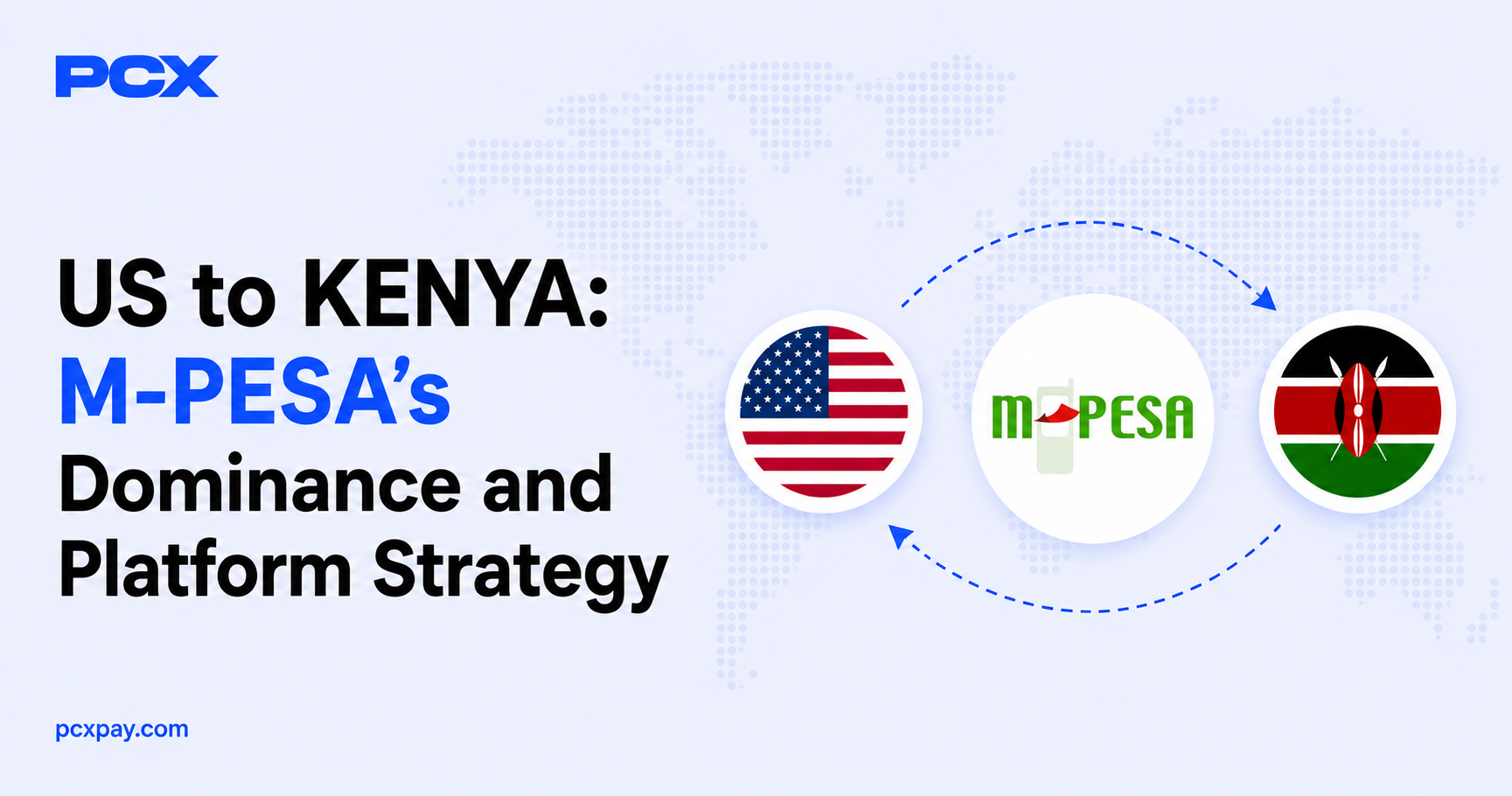
M Pesa Is Not Just a Payment Method

From the outside, M Pesa can look like another wallet integration.

Technically, it is far more foundational than that.

In Kenya, M Pesa functions as everyday financial infrastructure. Users rely on it for transfers, merchant payments, salary movement, bill payments, and business operations. In many cases, mobile money adoption exceeds traditional banking usage entirely.

That creates a major shift for international platforms.

In the US, payment experiences are often designed around cards first. In Kenya, users expect payment experiences designed around mobile money behavior. The assumptions behind transaction flow, confirmation timing, authentication, and settlement expectations become completely different.

This is where many cross border platforms struggle.

The Infrastructure Challenge Behind Mobile Money

Integrating M Pesa is not simply about enabling collections.

Platforms must account for asynchronous confirmations, telecom dependencies, local compliance requirements, settlement timing differences, and corridor specific payout behavior.

Even user psychology changes.

Card based systems are designed around instant authorization. Mobile money ecosystems often operate around trust in transaction confirmation messages, wallet balances, and telecom driven workflows.

When platforms ignore these differences, friction appears quickly. Payment completion rates drop. Settlement visibility weakens. Support tickets increase because the infrastructure behaves differently from what the product experience assumed.

The challenge is not connectivity.

It is localization.

Why Platform Strategy Matters More Than APIs

For global fintech platforms, expansion into Kenya requires more than technical integration. It requires adapting infrastructure strategy to local financial behavior.

At PCXPay, cross border infrastructure is designed around this reality. Different markets operate on different payment expectations, liquidity conditions, and settlement systems. Routing logic, transaction orchestration, and payout infrastructure must adapt dynamically across corridors rather than forcing every market into a single payment model.

This becomes especially important in mobile money dominant regions where reliability depends heavily on local settlement coordination and ecosystem visibility.

The platforms that scale successfully across Africa are rarely the ones with the most integrations.

They are the ones that understand how local payment behavior shapes infrastructure decisions.

Because ultimately, expanding into Kenya is not about adding another payment rail.

It is about understanding that in some markets, the rail is the economy itself.

If your platform is exploring cross border payments into mobile money driven markets, infrastructure strategy matters just as much as connectivity.

Learn how PCXPay helps businesses navigate cross border payment complexity through infrastructure built for local payment behavior, transaction visibility, and scalable global operations.
#crossborderpayments#fintechinfrastructure#mpesa#systemdesign#mobilemoney#emergingmarkets

Other Stories

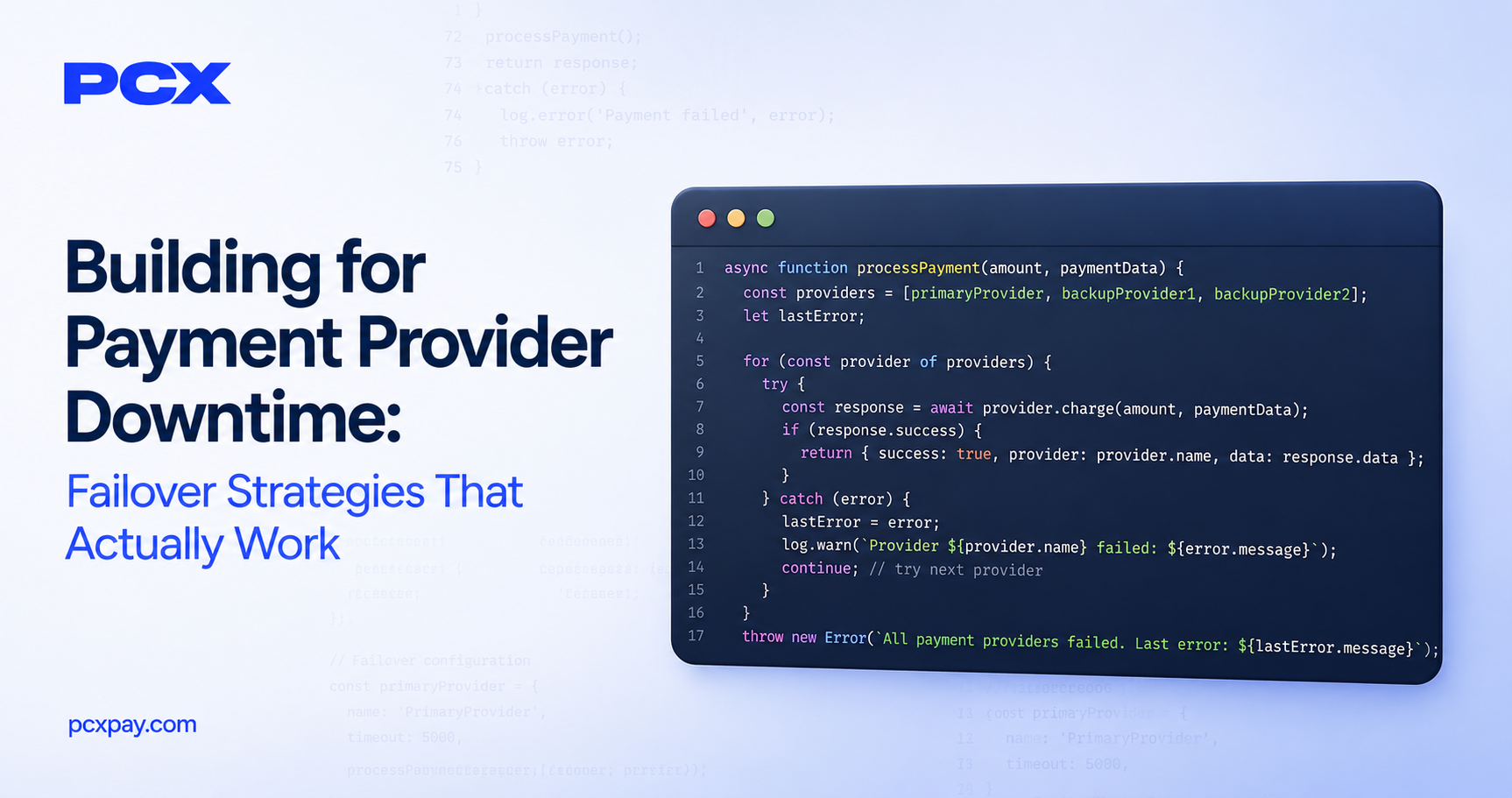
Building for Payment Provider Downtime: Failover Strategies That Actually Work

Building for Payment Provider Downtime: Failover Strategies That Actually Work

Payment infrastructure rarely fails all at once. What usually happens is far more dangerous. A provider remains technically "online", but transaction approvals begin slowing down. Settlement confirmations arrive inconsistently. Certain corridors quietly fail while dashboards continue showing green uptime indicators. Support tickets increase before monitoring systems even detect a problem. At a small scale, these disruptions feel temporary. Teams wait for providers to recover and manually resolve exceptions later. At platform scale, that approach breaks quickly. Because downtime in modern payments is rarely binary. It is partial, fragmented, and unpredictable. And the systems that survive these moments are not necessarily the systems with the best providers. They are the systems designed to continue operating when providers become unreliable.

Thursday, 27 August 2026

Read More
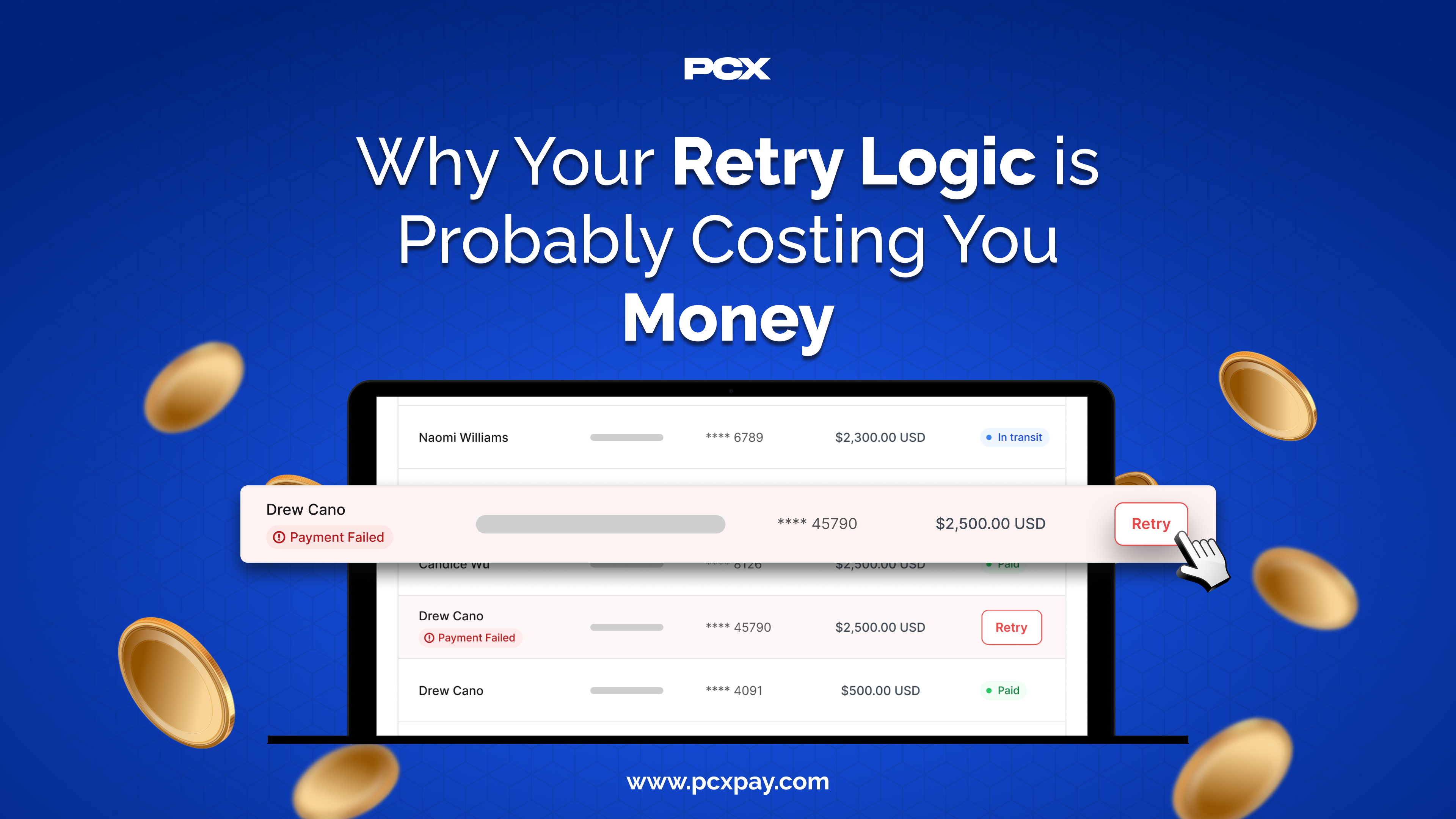
Why Your Retry Logic is Probably Costing You Money

Why Your Retry Logic is Probably Costing You Money

Most payment systems treat retries as a safety mechanism. A transaction fails, the system tries again, and success rates improve. At least in theory. In practice, poorly designed retry logic often creates hidden operational costs that become more expensive as transaction volume grows. Duplicate processing, unnecessary routing fees, delayed settlements, partner strain, and inflated infrastructure usage are all common side effects of retry systems designed around brute force repetition rather than intelligent orchestration. Retries solve failure. But unmanaged retries can also amplify it.

Friday, 21 August 2026

Read More
Multi-Currency Wallets: Simple Concept, Complex Execution

Multi-Currency Wallets: Simple Concept, Complex Execution

Multi-currency wallets appear deceptively simple from the outside. Hold multiple balances. Convert between currencies. Send and receive funds across regions. For users, the experience feels straightforward. Behind the infrastructure layer, however, multi-currency systems are one of the most operationally complex products payment platforms can build. Because supporting multiple currencies is not simply about displaying different balances. It requires coordinating settlement behaviour, liquidity management, FX exposure, compliance obligations, and transaction visibility across entirely different financial systems simultaneously. The complexity begins long before the first currency conversion occurs.

Friday, 14 August 2026

Read More
The "1,000 Transactions" Trap: Why Early Payment Success Doesn't Scale

The "1,000 Transactions" Trap: Why Early Payment Success Doesn't Scale

The first thousand transactions usually create a dangerous kind of confidence. Payments appear stable. Reconciliation feels manageable. Support tickets stay low. Dashboards look healthy. From the surface, the infrastructure seems ready for growth. Then volume increases. Suddenly, retries begin stacking. Settlement mismatches become harder to trace. Transaction delays appear across specific corridors. Finance teams start escalating inconsistencies engineering teams cannot immediately reproduce. What worked perfectly at low volume begins failing under operational pressure. This is one of the most common traps in payment infrastructure. Early payment success is not proof of scalability. It is often proof that the system has not yet been stressed.

Wednesday, 5 August 2026

Read More
Why "Free" Payment APIs Cost More Than You Think

Why "Free" Payment APIs Cost More Than You Think

"Free" is one of the most effective words in fintech marketing. Free API access. Free integrations. Zero setup costs. For early-stage companies moving quickly, these offers feel compelling. A few lines of code, a sandbox environment, and payments appear operational within days. From the outside, it looks like infrastructure has become commoditised. But payment infrastructure is rarely free. The cost simply moves somewhere less visible.

Wednesday, 29 July 2026

Read More
Why Your Payment Provider's Uptime Claim Is Misleading

Why Your Payment Provider's Uptime Claim Is Misleading

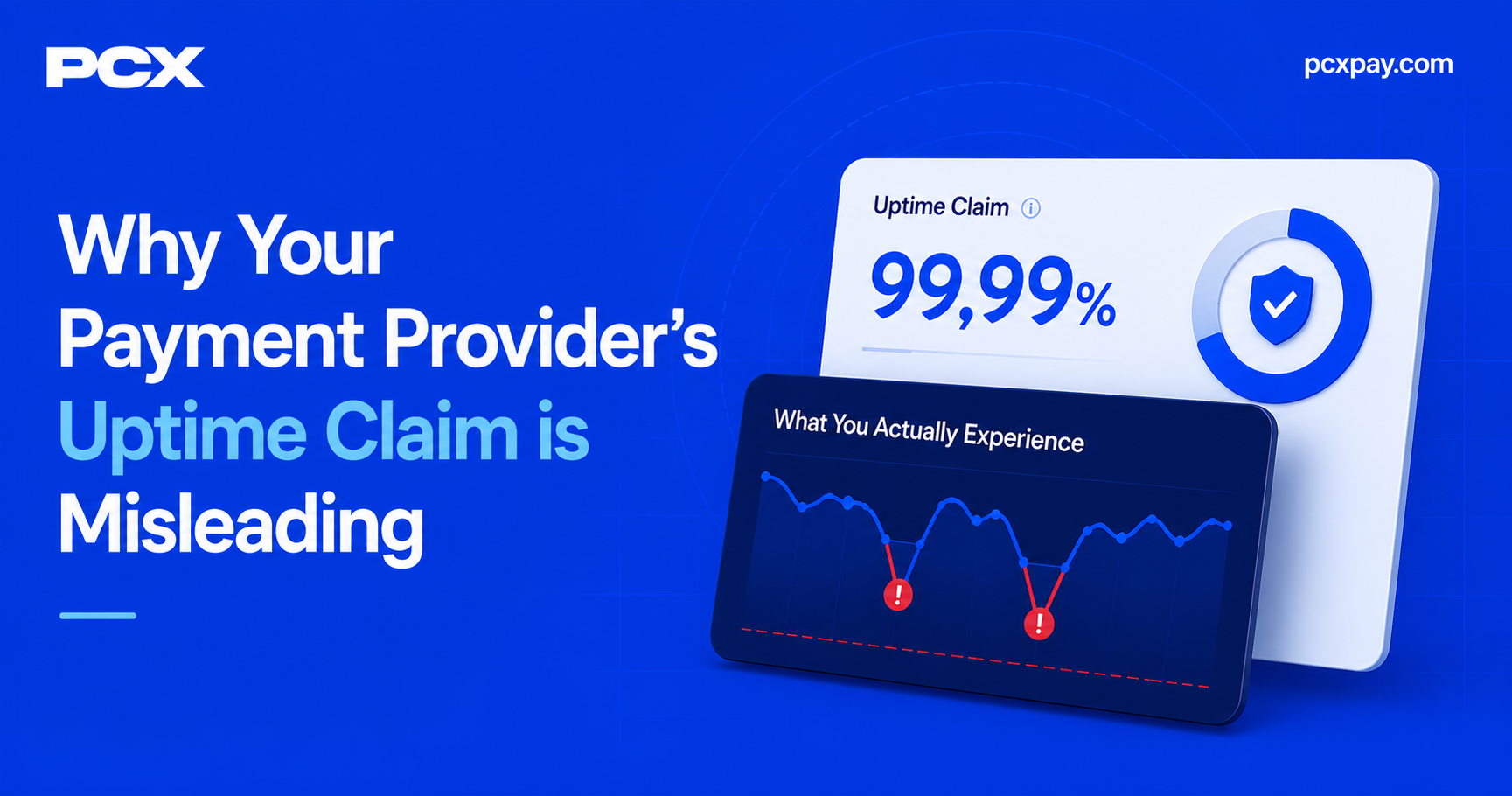
"99.9% uptime" has become one of the most overused metrics in payment infrastructure. It appears on landing pages, sales decks, and vendor comparison sheets across the industry. For many companies evaluating payment providers, high uptime percentages create the impression of reliability and operational stability. But uptime alone says very little about whether payments actually succeed. A payment API can remain technically available while transactions fail downstream across settlement rails, banking partners, compliance systems, or liquidity providers. Requests still receive responses. Dashboards remain accessible. Status pages stay green. Meanwhile, payouts stall, settlement queues delay, and cross-border transactions fail silently several layers deeper in the infrastructure stack. From a monitoring perspective, the provider is "online". From a business perspective, payments are breaking.

Wednesday, 22 July 2026

Read More

Make Money Borderless

Stop building payment infrastructure. Start shipping features that matter. Join the platforms already moving money globally with PCX.