How PCXPay’s Stellar Anchor Connects USDC to Fiat
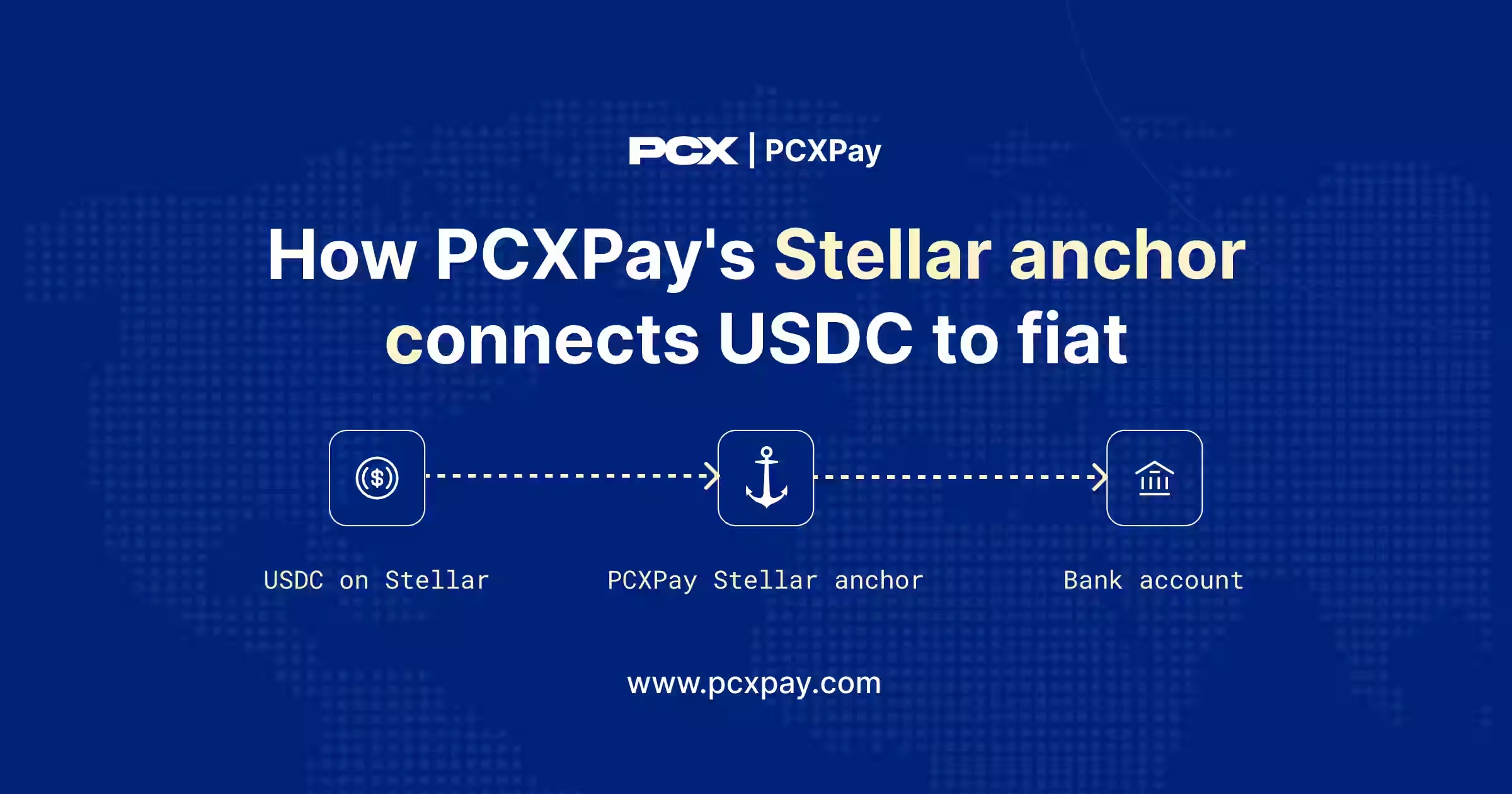
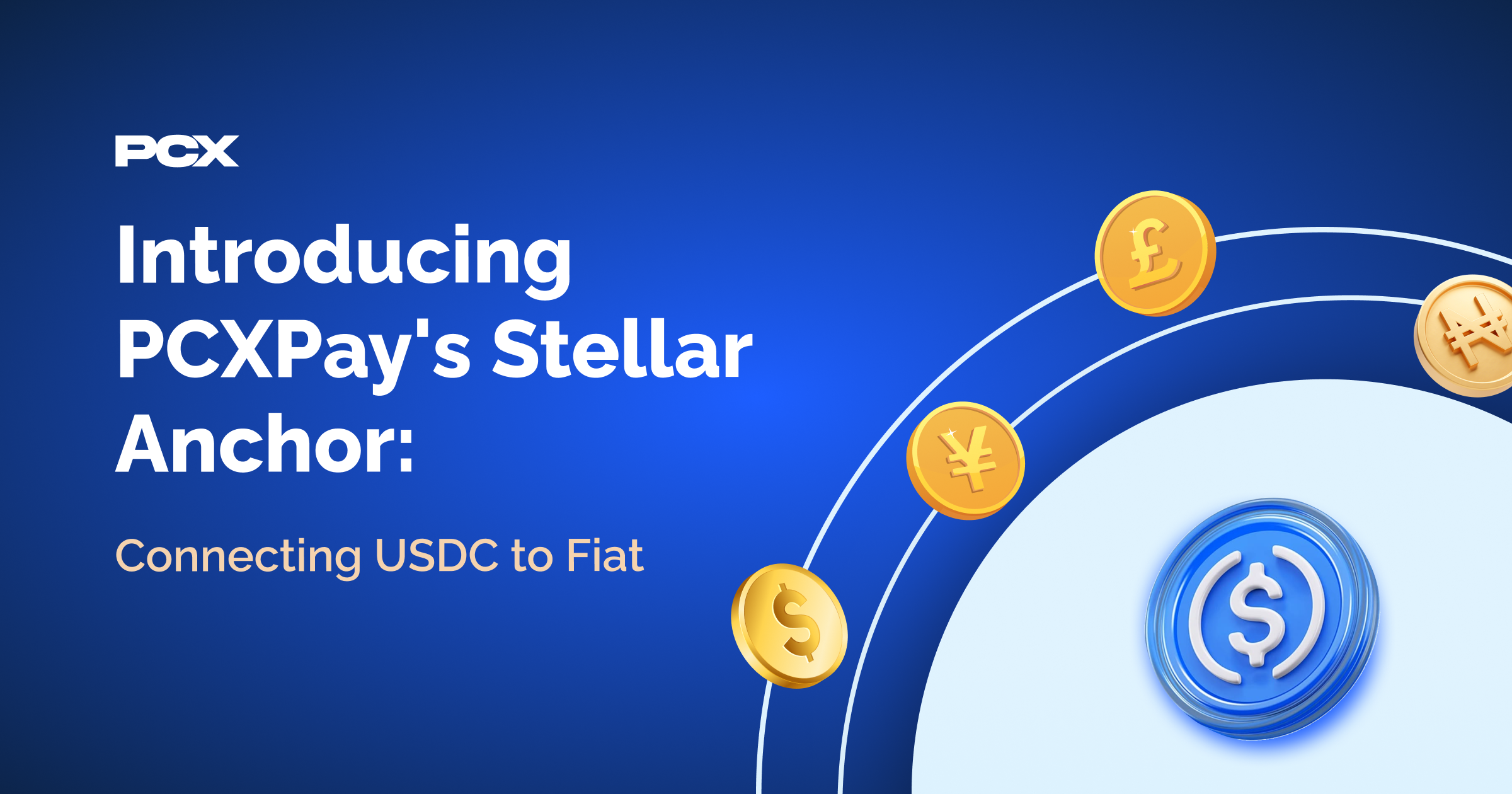
USDC can move across the Stellar network, but moving a digital dollar is not the same as getting money into a bank account.
A business might receive USDC from an international customer, hold it in a Stellar wallet or use it to make payments. But when that business needs to pay a supplier in naira, a contractor in pounds or a beneficiary in Kenyan shillings, it needs something beyond blockchain settlement.
It needs a connection to the financial system.
That is where PCXPay's Stellar Anchor comes in.
To understand how it works, it helps to understand the three components involved: Circle, Stellar and PCXPay. Each plays a different role in connecting digital value to traditional financial infrastructure.
Understanding the relationship between Circle, Stellar and PCXPay
Circle is the issuer of USDC, a digital dollar designed to maintain a one to one value with the US dollar. Stellar is one of the blockchain networks that supports native USDC, providing an environment for transferring the asset between compatible wallets and applications.
PCXPay operates at another layer.
Its Stellar Anchor connects USDC on Stellar to fiat conversion and banking infrastructure, allowing eligible customers to move between digital assets and supported traditional currencies.
Think of it this way:
- Circle provides the digital dollar.
- Stellar provides the network on which it moves.
- PCXPay provides the connection to the fiat payment system.
This distinction is important. PCXPay is not issuing another version of USDC or replacing Circle's role. Its Anchor addresses what happens when a customer wants to move beyond holding or transferring a stablecoin.
How does the PCXPay Stellar Anchor work?
The process begins with a compatible Stellar wallet. A customer connects to PCXPay as an Anchor and completes the required authentication and identity verification.
Stellar's established SEP standards provide the framework for this interaction:
- SEP 10 supports authentication.
- SEP 12 handles customer information and KYC.
- SEP 24 provides the interactive deposit and withdrawal experience.
Once the customer enters the transaction flow, they can select their preferred fiat currency, review the conversion rate and applicable fees, provide the necessary payout details and confirm the transaction.
PCXPay then coordinates the remaining stages through its internal conversion engine and existing banking rails.
For example, someone holding USDC in a Stellar wallet may want to receive NGN in a Nigerian bank account. The Anchor provides the structured process through which the USDC is received, converted and paid out through the relevant banking infrastructure.
The reverse process allows customers to move fiat into USDC on Stellar.
The first version supports five fiat currencies: NGN, KES, GBP, EUR and USD. It focuses on USDC on Stellar, with deposits and withdrawals supported through the same infrastructure.
Why this matters for businesses
The value becomes clearer when we move beyond individual wallet users.
Consider a business with contractors across Nigeria, Kenya and the UK. It may hold funds in USDC but need to pay its contractors in their respective local currencies.
An NGO may receive funding in one currency, distribute stablecoins to recipients and need a reliable way for those recipients to access local money.
A marketplace may allow creators to receive USDC but still need to support withdrawals into traditional financial accounts.
In each case, the business needs more than a way to transfer digital assets. It needs infrastructure that can connect those assets to the currencies and payment systems its operations depend on.
That is the opportunity behind the Stellar Anchor.
More than a blockchain connection
A useful payment infrastructure cannot stop at a successful blockchain transaction.
It must also account for customer verification, conversion, transaction tracking, reconciliation and settlement. If a conversion request times out or a banking rail becomes unavailable, the system needs a way to identify the problem and manage the transaction.
These operational requirements are part of the PCXPay Stellar Anchor design. The product includes transaction records, compliance reporting, reconciliation and recovery procedures to support the full payment journey.
The experience may look simple to the customer, but the infrastructure behind it needs to coordinate several moving parts.
As PCXPay develops its broader multi chain strategy, Stellar represents an important entry point into a wider approach to connecting stablecoins with fiat payment systems.
The objective is not simply to make USDC easier to move. It is to make that value more useful once it leaves the wallet.
Explore how PCXPay's Stellar Anchor connects USDC on Stellar to NGN, KES, GBP, EUR and USD through integrated conversion and banking infrastructure.