How Stellar Anchors Are Changing Cross-Border Payments
Cross-border payments have always had the same basic problem: moving value across a border is only half the job.
The other half is making that value usable on the other side.
A business can move USDC across the Stellar network in a matter of seconds, but the recipient may still need NGN in a Nigerian bank account, KES in Kenya, GBP in the UK, or another local currency they already use.
This is where Stellar Anchors are becoming increasingly important.
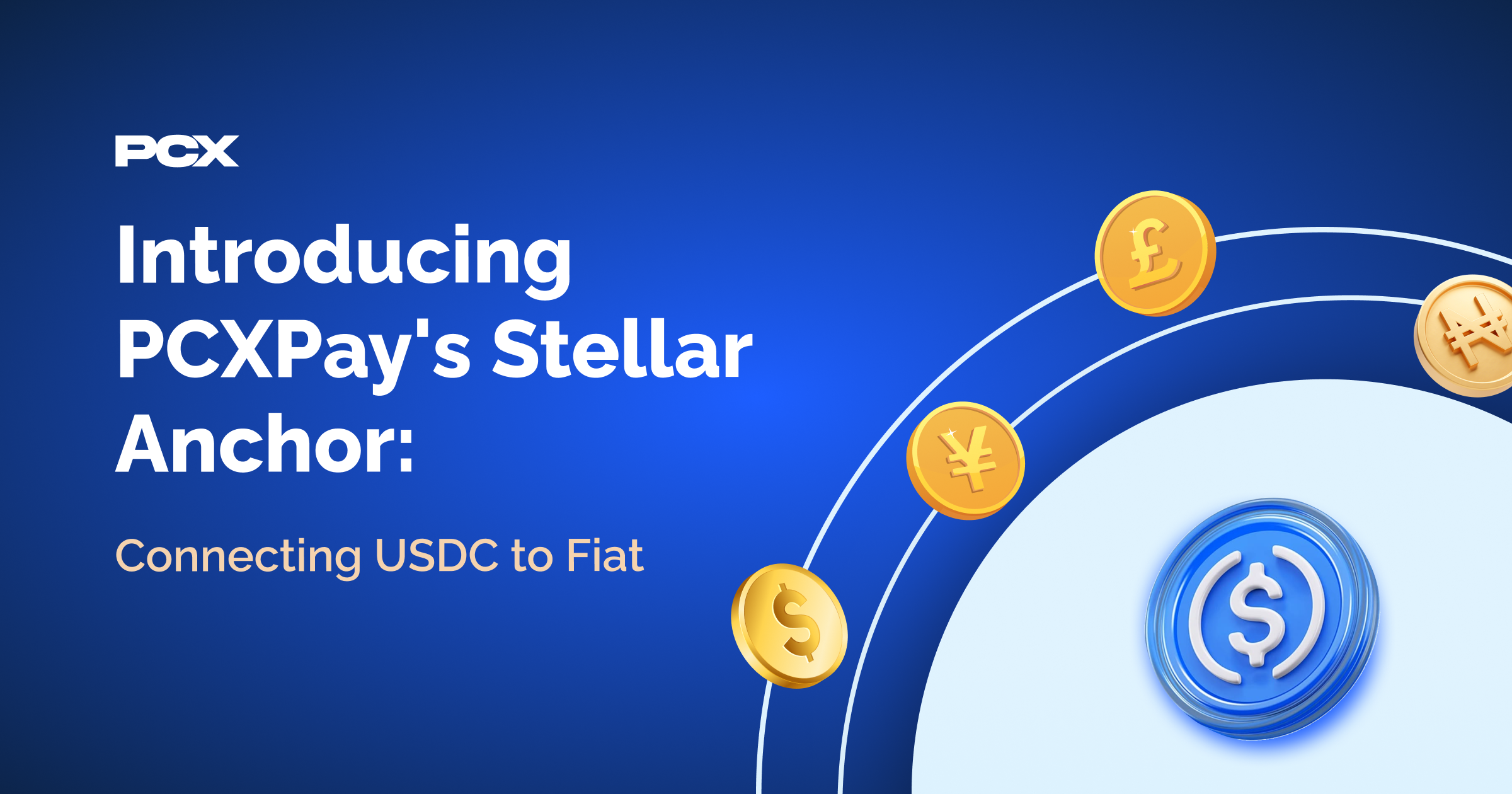
An Anchor connects digital assets on the Stellar network to the traditional financial system, creating a path between blockchain-based value and fiat settlement. PCXPay's Stellar Anchor is designed around exactly this connection, supporting USDC on Stellar and conversion into and out of NGN, KES, GBP, EUR and USD through PCX's existing conversion and banking infrastructure. The important shift is not simply that stablecoins can move across borders.
It is that they can have a clearer path once they get there.
The cross-border problem is bigger than moving money
A typical cross-border payment can involve multiple currencies, banking institutions, payment providers, compliance checks, foreign exchange processes and settlement points.
That complexity becomes even more visible when the sender and recipient use completely different financial systems.
A business sending funds from the UK to Africa, for example, may be able to transfer a stablecoin digitally, but its recipient may ultimately need funds in a local bank account or mobile money environment.
The blockchain solves one part of the journey.
The Anchor helps connect that journey to the fiat side.
With a Stellar Anchor, a wallet can interact with an established process for authentication, customer information, deposit and withdrawal, conversion and payout. PCXPay uses Stellar standards including SEP 1, SEP 10, SEP 12 and SEP 24 to support those interactions. This creates a more connected payment flow.
The user does not have to think about every system sitting underneath the transaction.
The infrastructure does.
From blockchain settlement to local currency
Consider a business holding USDC in a Stellar wallet that needs to pay someone in Nigeria.
The business or its payment flow can begin with USDC on Stellar. Through the Anchor process, the user authenticates, completes the required KYC checks, selects NGN, reviews the conversion and fees, provides the required payout details and initiates the transaction.
PCX then receives the USDC, processes the conversion through its internal conversion engine and sends the resulting fiat through its banking rails. The same infrastructure can support the reverse journey, where fiat is converted into USDC for delivery to a Stellar wallet.
That matters because cross-border payments are rarely about one direction.
Businesses collect, convert, pay, receive and move funds back and forth.
Infrastructure has to support the entire lifecycle.
Why this matters for businesses
The value of a Stellar Anchor becomes more obvious when the payment is part of a larger business workflow.
A treasury team may hold stablecoins but need fiat for operating expenses.
A company with a distributed contractor team may receive USDC and need to pay developers in GBP, NGN, KES, EUR or USD.
An NGO may distribute stablecoins to recipients who ultimately need local currency.
A marketplace may allow users to receive USDC and cash out into fiat.
The common requirement is simple.
The business does not just need a blockchain rail.
It needs the last mile.
The last mile is where infrastructure gets complicated
Connecting a blockchain wallet to a bank account may sound straightforward until the edge cases arrive.
What happens when a customer sends the wrong amount?
What happens when KYC requires additional information?
What happens when the conversion engine times out?
What happens when the bank rail is temporarily unavailable?
A payment infrastructure system has to know where the transaction is, what failed, what can be retried and what needs human intervention.
PCXPay's Stellar Anchor architecture includes transaction state tracking, reconciliation, audit trails, monitoring and recovery procedures for these scenarios. Incoming USDC transactions and outgoing fiat settlements are logged, while transaction activity is mapped across the lifecycle from Stellar through to bank settlement. This is an important distinction.
A cross-border payment is not successful simply because the blockchain transaction succeeded.
It is successful when the intended value reaches the intended destination.
A more connected model for cross-border payments
Stellar Anchors are changing the conversation around cross-border payments because they create a practical connection between two systems that are often treated separately.
On one side is blockchain-based value.
On the other is the financial infrastructure businesses and customers already depend on.
The Anchor sits between them.
That matters because the future of cross-border payments is unlikely to belong exclusively to banks or exclusively to blockchain networks.
It will belong to infrastructure that can connect both.
The real opportunity is not simply moving money across borders.
It is making the systems on both sides of the border work together.
Explore how PCXPay is building a regulated stablecoin-to-fiat infrastructure that connects Stellar transactions to local financial rails across five currencies.