Dollarization Trends in African Markets: What It Means for Payment Platforms
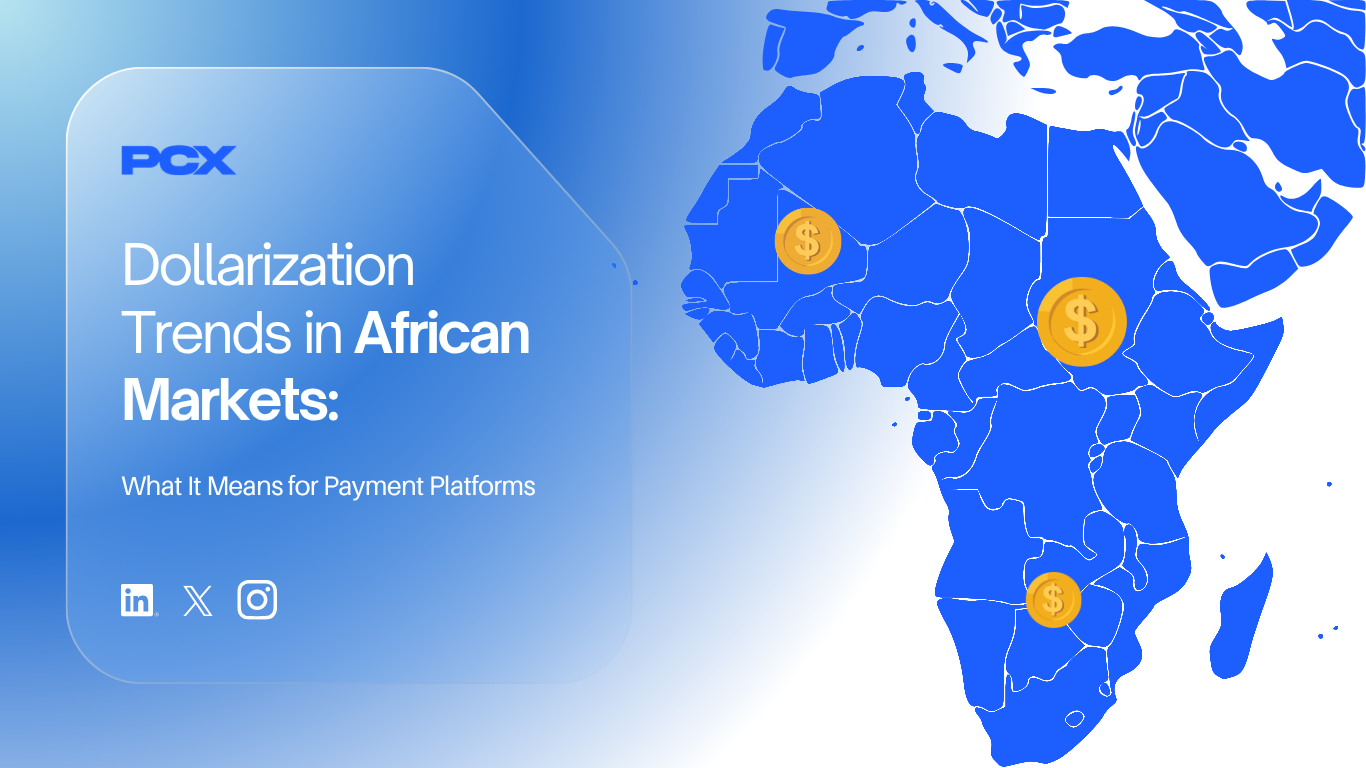
The Shift Beneath the Surface
Currency volatility has made value preservation a central concern for both individuals and businesses.
When local currencies fluctuate significantly, users begin to anchor their expectations to more stable alternatives. USD becomes a mental model for value, even when transactions are executed in local currency.
This shows up in subtle ways. Users expect stable pricing. Businesses prefer to invoice in dollars. Cross-border transactions increasingly require USD liquidity at some point in the flow.
What looks like a local payment is often indirectly tied to USD behind the scenes.
Where Platforms Feel the Pressure
For platforms, dollarization introduces tension between user expectations and infrastructure reality.
Users want stability. They want to send, receive, or store value without worrying about sudden currency shifts. At the same time, local payment rails operate in domestic currencies with their own liquidity constraints.
Bridging this gap requires more than simple FX conversion.
Timing becomes critical. A delay between conversion and settlement can introduce unexpected losses. Liquidity availability determines whether conversions can happen at predictable rates. Regulatory controls may restrict how and when USD can be accessed or held.
Without coordinated infrastructure, platforms begin to experience pricing inconsistencies, settlement mismatches, and margin erosion.
The Hidden Cost of Ignoring It
At small scale, FX fluctuations may appear manageable. At higher volumes, they become material.
Small spreads compound across thousands of transactions. Delayed conversions introduce exposure. Inconsistent pricing affects user trust.
Finance teams struggle to forecast. Product teams struggle to maintain consistent user experience. Engineering teams are forced to patch together solutions that were never designed for currency volatility.
Dollarization is not just a macroeconomic trend. It is an infrastructure challenge.
Building for Dual Currency Reality
Modern payment platforms in African markets are effectively operating in two layers.
The first is local currency execution. This is where collections and payouts happen through domestic rails.
The second is value alignment. This is where USD liquidity, FX conversion, and pricing logic ensure that value remains consistent across transactions.
At PCXPay, this duality is handled within a unified system where FX execution, liquidity access, and settlement timing are coordinated rather than isolated.
This allows platforms to manage local transactions while maintaining predictable value outcomes.
Stability as a Product Experience
Users rarely think about FX mechanics. They think about whether the value they send is the value that arrives.
When platforms handle dollarization well, transactions feel stable even in volatile environments. When they do not, users notice immediately.
The difference is not in the interface. It is in how infrastructure manages currency risk behind the scenes.
As African markets continue to evolve, platforms that treat dollarization as an infrastructure problem, not just a pricing issue, will be better positioned to scale.
Explore how PCXPay helps platforms manage FX, liquidity, and settlement in volatile currency environments without sacrificing user trust.