What “Coverage really means in Cross-Border Payments”

Friday, 29 May 2026|2 mins. read
What “Coverage really means in Cross-Border Payments”
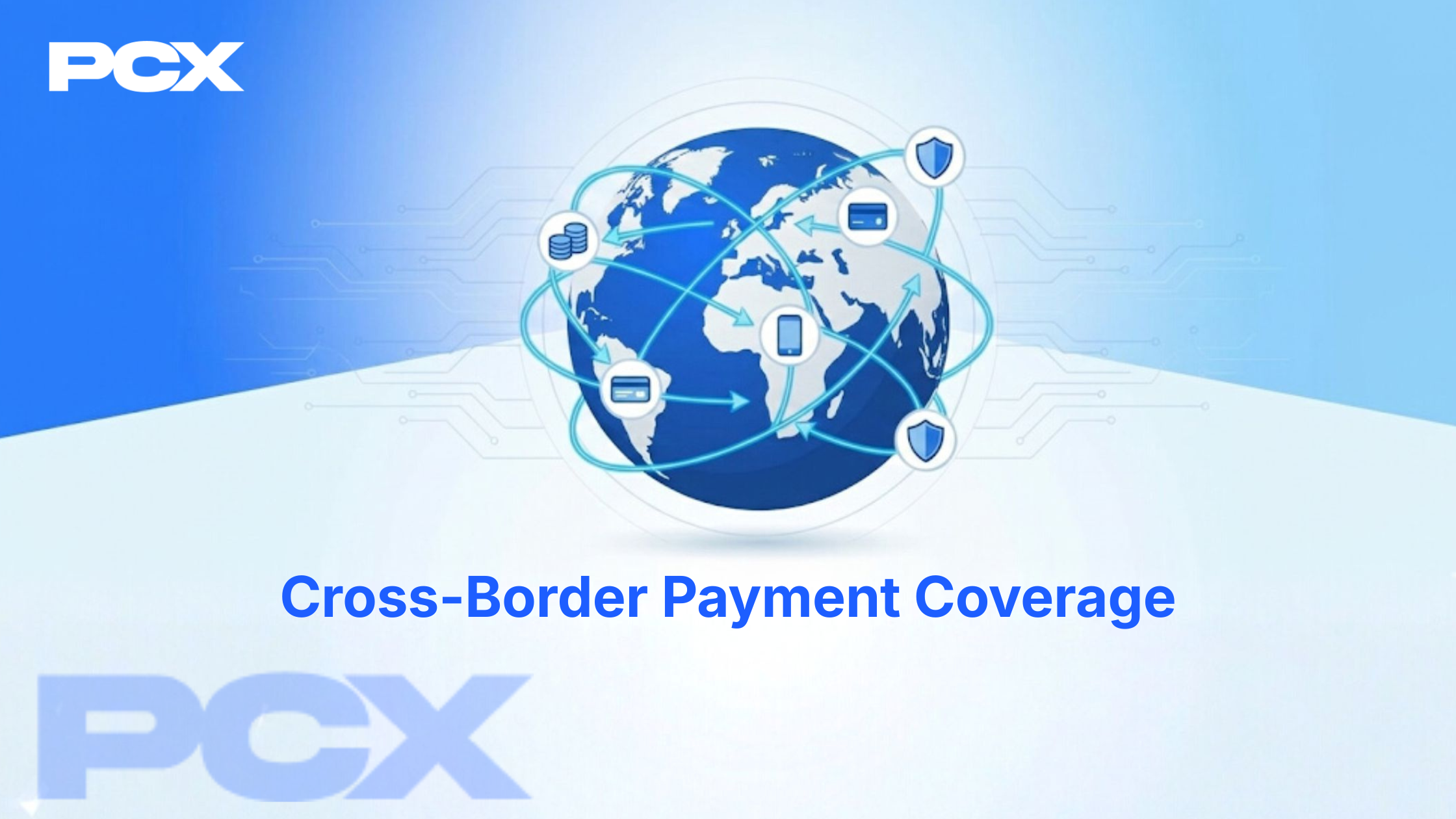
The Myth of Global Coverage

Global coverage isn’t just about connecting a handful of banks or rails. It’s about ensuring that money can move:

  • Reliably — without failed transfers or settlement delays.
  • Efficiently — with transparent FX and minimal hidden costs.
  • At scale — whether the transaction is €0.50 or €50,000.

A corridor on a map doesn’t guarantee liquidity, speed, or transparency. Many providers boast “access” to markets where settlement is still slow, fragmented, or prohibitively expensive.

Corridor Fragmentation: The Real Bottleneck

Nowhere is this clearer than in the Africa ↔ Europe corridor. While demand is massive — driven by trade, remittances, and digital services — the reality is fractured. Multiple intermediaries, fragmented FX markets, and inconsistent compliance rules create friction at every step. That’s why transfers can take days and rack up costs, even when the amounts are modest.

For founders and CFOs, that complexity translates into uncertainty. For CTOs, it becomes an engineering challenge — reconciling multiple rails, settlement lags, and failed payments in systems that were never designed for real-time finance.

Coverage as Liquidity + Infrastructure

True coverage goes beyond geography. It’s a function of:

  • Liquidity: Having deep, reliable pools on both ends of a corridor.
  • Multi-rail infrastructure: The ability to route transactions across stablecoins, cards, bank transfers, and local payment systems depending on what works best in real time.
  • Compliance at the rail level: Knowing that corridor-specific regulations are abstracted away from the operator.

Without all three, “coverage” is marketing not infrastructure.

How Partnerships Unlock Real Access

Strategic partnerships are key to unlocking real coverage. Circle provides stablecoin infrastructure that enables instant settlement across markets. Yellow Card extends reach into Africa’s most important payment corridors. Together with PCX’s routing and compliance layer, these partnerships transform “coverage” from a claim into a competitive advantage.

Why This Matters for Founders and CTOs

Coverage isn’t about where you could send money. It’s about whether funds actually arrive, on time, every time, with costs you can predict and scale you can trust. That reliability impacts everything from treasury forecasting to user experience.

When coverage is shallow, trust erodes. When it’s deep, founders gain leverage — faster supplier discounts, better cash flow cycles, and the confidence to expand into new markets.

The Bottom Line

Global coverage isn’t a map. It’s the combination of liquidity, infrastructure, and partnerships that make payments work in the real world.

That’s what PCX delivers: direct corridors, instant settlement, and compliance handled behind the scenes. For founders and CTOs alike, it means true coverage you can build on.
Other Stories

Embedded Finance for Non-Fintechs: What SaaS and Marketplace Founders Need to Know Before They Start

Embedded Finance for Non-Fintechs: What SaaS and Marketplace Founders Need to Know Before They Start

Embedded finance feels like a feature until it starts behaving like infrastructure.

Wednesday, 17 June 2026

Read More
The KYC Handoff Problem: Who Owns Compliance When You're Using Embedded Finance?

The KYC Handoff Problem: Who Owns Compliance When You're Using Embedded Finance?

KYC looks straightforward on paper. A user signs up. Identity is verified. The account is approved. The platform remains compliant. But in embedded finance, that flow is rarely owned by a single system. Instead, it is distributed. The platform owns the user experience. A provider handles identity verification. A banking partner holds the account. A payment processor executes transactions. Somewhere in that chain, compliance responsibility is assumed to be handled. The problem is that assumption is often unclear.

Wednesday, 10 June 2026

Read More
How Embedded Finance Changes the Unit Economics of a B2B SaaS Business

How Embedded Finance Changes the Unit Economics of a B2B SaaS Business

B2B SaaS used to be simple to model. You acquire a customer. You charge a subscription. You manage churn. Growth is driven by pricing, retention, and distribution. Then embedded finance enters the picture. At first, it looks like an add-on. Payments, wallets, payouts. A way to improve user experience. But underneath, it reshapes the economics of the entire business. What changes is not just functionality. It is how revenue is generated, how margins behave, and how customer acquisition compounds over time.

Wednesday, 3 June 2026

Read More
Dollarization Trends in African Markets: What It Means for Payment Platforms

Dollarization Trends in African Markets: What It Means for Payment Platforms

Across multiple African markets, a quiet shift is happening. Users are increasingly thinking in dollars. This is not always formal dollarization. In many cases, local currencies remain the primary medium of exchange. But for savings, pricing benchmarks, cross-border transactions, and large-value transfers, USD has become the reference point. For payment platforms, this shift introduces a new layer of complexity that cannot be ignored.

Friday, 29 May 2026

Read More
Mobile Money Is Not a Single Rail: Understanding the Fragmentation Across Africa

Mobile Money Is Not a Single Rail: Understanding the Fragmentation Across Africa

“Mobile money” sounds like a unified system. It isn’t. From the outside, it appears simple. A user selects mobile money, enters a number, and funds move. But underneath that single interface sits a fragmented network of providers, regulators, settlement models, and technical constraints that vary significantly across markets. The assumption that mobile money behaves like a standard payment rail is one of the most common mistakes platforms make when expanding across Africa.

Friday, 29 May 2026

Read More
Why African B2B Fintech Infrastructure Is Harder to Build Than It Looks

Why African B2B Fintech Infrastructure Is Harder to Build Than It Looks

At a glance, building fintech infrastructure in Africa can seem straightforward. Payments are growing, digital adoption is increasing, and demand is clear across multiple markets. But once you move beyond surface level assumptions, the reality becomes more complex. What works in one country often breaks in another. What looks like a simple integration quickly turns into a network of dependencies. And what feels like a product challenge is, in most cases, an infrastructure constraint.

Friday, 29 May 2026

Read More

Make Money Borderless

Stop building payment infrastructure. Start shipping features that matter. Join the platforms already moving money globally with PCX.