Why Sending 50 Cents Is Harder Than Sending Millions

Friday, 29 May 2026|2 mins. read
Why Sending 50 Cents Is Harder Than Sending Millions
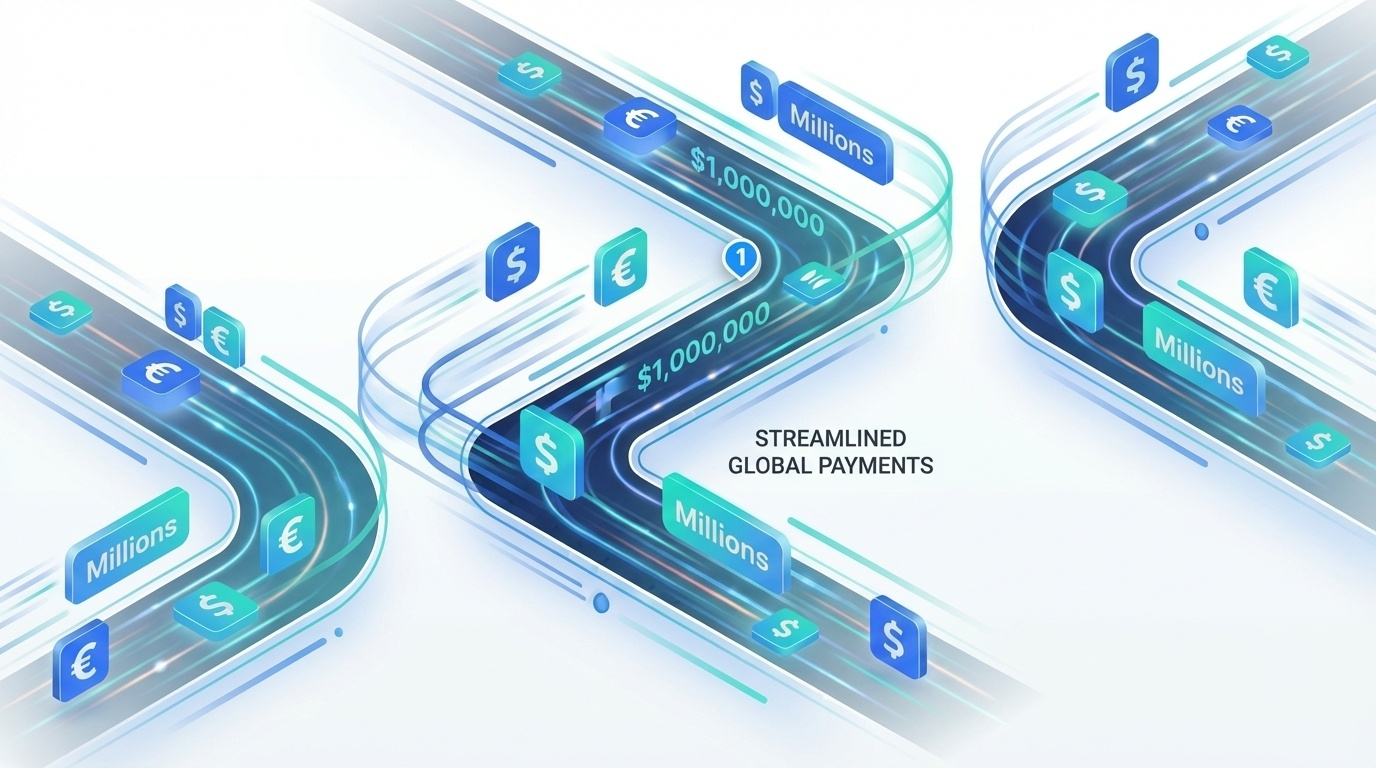
This isn’t because the technology does not exist. It is because much of the financial system was never designed for how people and platforms operate today.

Large transactions often move faster because they are prioritized. They pass through established banking routes with dedicated oversight. Smaller payments, especially cross border ones, are left navigating fragmented systems, multiple intermediaries, inconsistent FX rates, and settlement delays. Ironically, the smaller the amount, the more complex the journey can become.

At PCXPay, we see this problem clearly at the infrastructure level. The issue is not the size of the payment. It is how money is routed, converted, and settled across markets that were built in isolation from one another.

The Real Cost of Small Payments

For users, failed or delayed payments create frustration and distrust. For platforms, they create operational overhead. Support tickets increase. Reconciliation becomes harder. Margins shrink due to hidden fees and FX inefficiencies.

When platforms operate across borders, these small failures add up quickly. A few cents lost per transaction becomes significant at scale. What looks like a minor issue becomes a growth constraint.

The challenge is not just moving money. It is moving it predictably, efficiently, and transparently, regardless of amount.

Why Infrastructure Matters More Than Ever

Modern digital platforms are global by default. Marketplaces, fintech apps, creator platforms, and payment enabled products serve users in multiple regions from day one. Their users expect payments to work the same way everywhere.

That expectation places enormous pressure on financial infrastructure.

At PCXPay, our focus is on building the connective tissue that allows money to move across borders with the same reliability users expect from modern digital experiences. This means treating routing, FX, settlement, and compliance as a single coordinated system rather than disconnected steps.

When infrastructure is designed this way, sending fifty cents becomes no more difficult than sending millions.

What This Shift Enables

When money moves smoothly at all transaction sizes, platforms unlock new possibilities. Micro payments become viable. Global subscriptions scale. Cross border payouts feel effortless. Users trust the system because it simply works.

This is not about making payments louder or more visible. It is about removing friction so completely that users stop thinking about the process altogether.

The future of payments depends on infrastructure that respects both scale and simplicity. When that foundation is in place, size stops being a barrier.
Other Stories

Embedded Finance for Non-Fintechs: What SaaS and Marketplace Founders Need to Know Before They Start

Embedded Finance for Non-Fintechs: What SaaS and Marketplace Founders Need to Know Before They Start

Embedded finance feels like a feature until it starts behaving like infrastructure.

Wednesday, 17 June 2026

Read More
The KYC Handoff Problem: Who Owns Compliance When You're Using Embedded Finance?

The KYC Handoff Problem: Who Owns Compliance When You're Using Embedded Finance?

KYC looks straightforward on paper. A user signs up. Identity is verified. The account is approved. The platform remains compliant. But in embedded finance, that flow is rarely owned by a single system. Instead, it is distributed. The platform owns the user experience. A provider handles identity verification. A banking partner holds the account. A payment processor executes transactions. Somewhere in that chain, compliance responsibility is assumed to be handled. The problem is that assumption is often unclear.

Wednesday, 10 June 2026

Read More
How Embedded Finance Changes the Unit Economics of a B2B SaaS Business

How Embedded Finance Changes the Unit Economics of a B2B SaaS Business

B2B SaaS used to be simple to model. You acquire a customer. You charge a subscription. You manage churn. Growth is driven by pricing, retention, and distribution. Then embedded finance enters the picture. At first, it looks like an add-on. Payments, wallets, payouts. A way to improve user experience. But underneath, it reshapes the economics of the entire business. What changes is not just functionality. It is how revenue is generated, how margins behave, and how customer acquisition compounds over time.

Wednesday, 3 June 2026

Read More
Dollarization Trends in African Markets: What It Means for Payment Platforms

Dollarization Trends in African Markets: What It Means for Payment Platforms

Across multiple African markets, a quiet shift is happening. Users are increasingly thinking in dollars. This is not always formal dollarization. In many cases, local currencies remain the primary medium of exchange. But for savings, pricing benchmarks, cross-border transactions, and large-value transfers, USD has become the reference point. For payment platforms, this shift introduces a new layer of complexity that cannot be ignored.

Friday, 29 May 2026

Read More
Mobile Money Is Not a Single Rail: Understanding the Fragmentation Across Africa

Mobile Money Is Not a Single Rail: Understanding the Fragmentation Across Africa

“Mobile money” sounds like a unified system. It isn’t. From the outside, it appears simple. A user selects mobile money, enters a number, and funds move. But underneath that single interface sits a fragmented network of providers, regulators, settlement models, and technical constraints that vary significantly across markets. The assumption that mobile money behaves like a standard payment rail is one of the most common mistakes platforms make when expanding across Africa.

Friday, 29 May 2026

Read More
Why African B2B Fintech Infrastructure Is Harder to Build Than It Looks

Why African B2B Fintech Infrastructure Is Harder to Build Than It Looks

At a glance, building fintech infrastructure in Africa can seem straightforward. Payments are growing, digital adoption is increasing, and demand is clear across multiple markets. But once you move beyond surface level assumptions, the reality becomes more complex. What works in one country often breaks in another. What looks like a simple integration quickly turns into a network of dependencies. And what feels like a product challenge is, in most cases, an infrastructure constraint.

Friday, 29 May 2026

Read More

Make Money Borderless

Stop building payment infrastructure. Start shipping features that matter. Join the platforms already moving money globally with PCX.