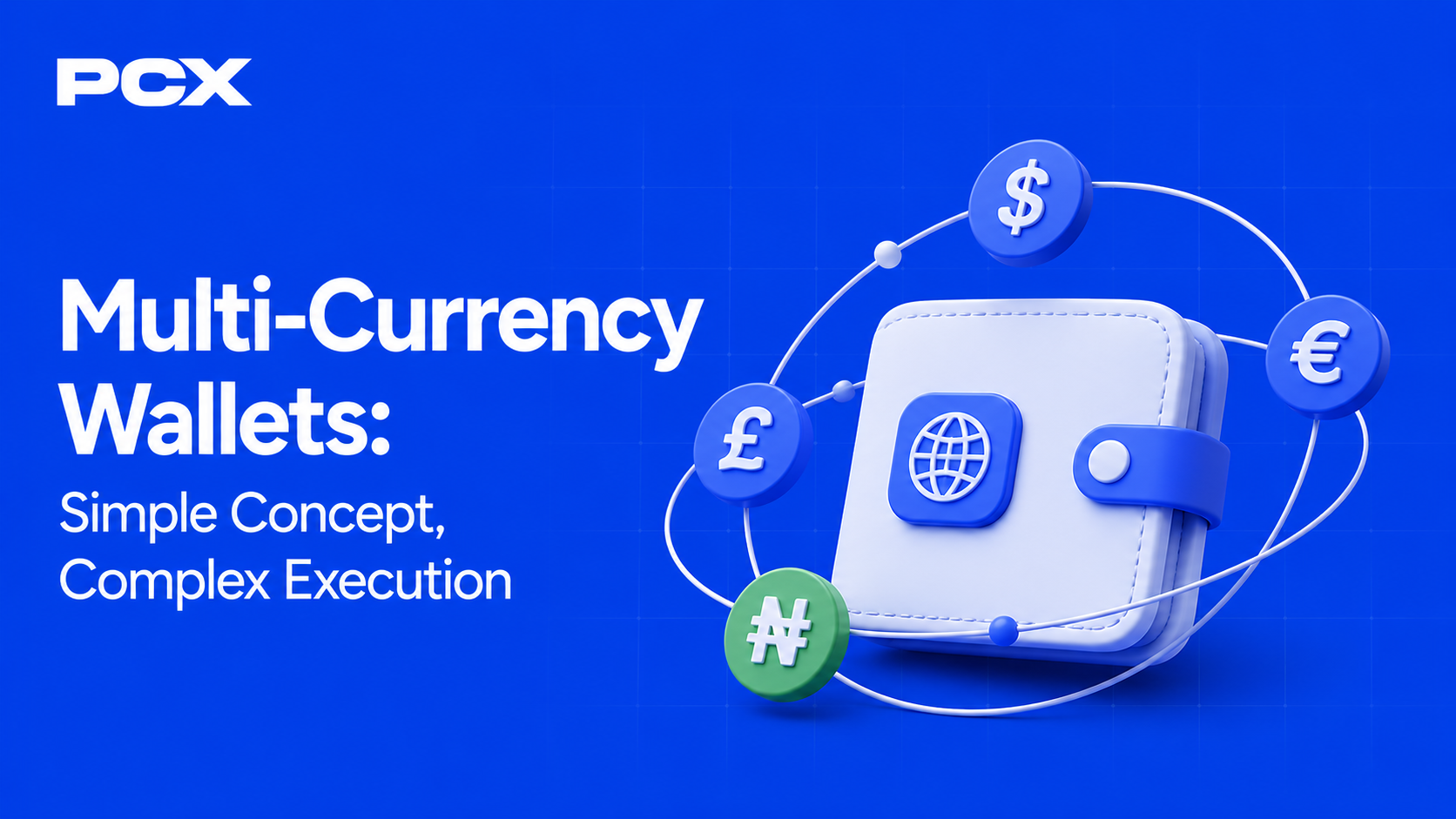
Why Wallets and Virtual Accounts Are Harder to Scale Than They Look
To users, wallets feel effortless.
Funds appear instantly. Transfers complete in seconds. Balances update in real time.
But beneath that simplicity lies a complex financial infrastructure that must operate perfectly at scale.
At early stage, wallet systems appear stable because transaction volume is low. Teams can manually correct discrepancies. Settlement timing variations go unnoticed. Ledger mismatches are rare and manageable.
Growth changes the equation.
When Wallet Growth Exposes Infrastructure Weakness
As user numbers increase and transaction frequency rises, wallet systems must coordinate:
Real time ledger updates
Cross border currency conversion
Settlement timing across banking systems
Compliance monitoring across jurisdictions
Accurate reconciliation for every inflow and outflow
Even minor inconsistencies compound quickly.
If settlement timing lags behind balance updates, trust erodes.
If reconciliation errors occur, support tickets escalate.
If cross border FX handling is inconsistent, users notice discrepancies.
What seemed like a simple wallet product becomes an operational risk.
Why Wallets Are an Infrastructure Challenge
Wallets are not just user interfaces. They are financial ledgers that must remain accurate under continuous pressure.
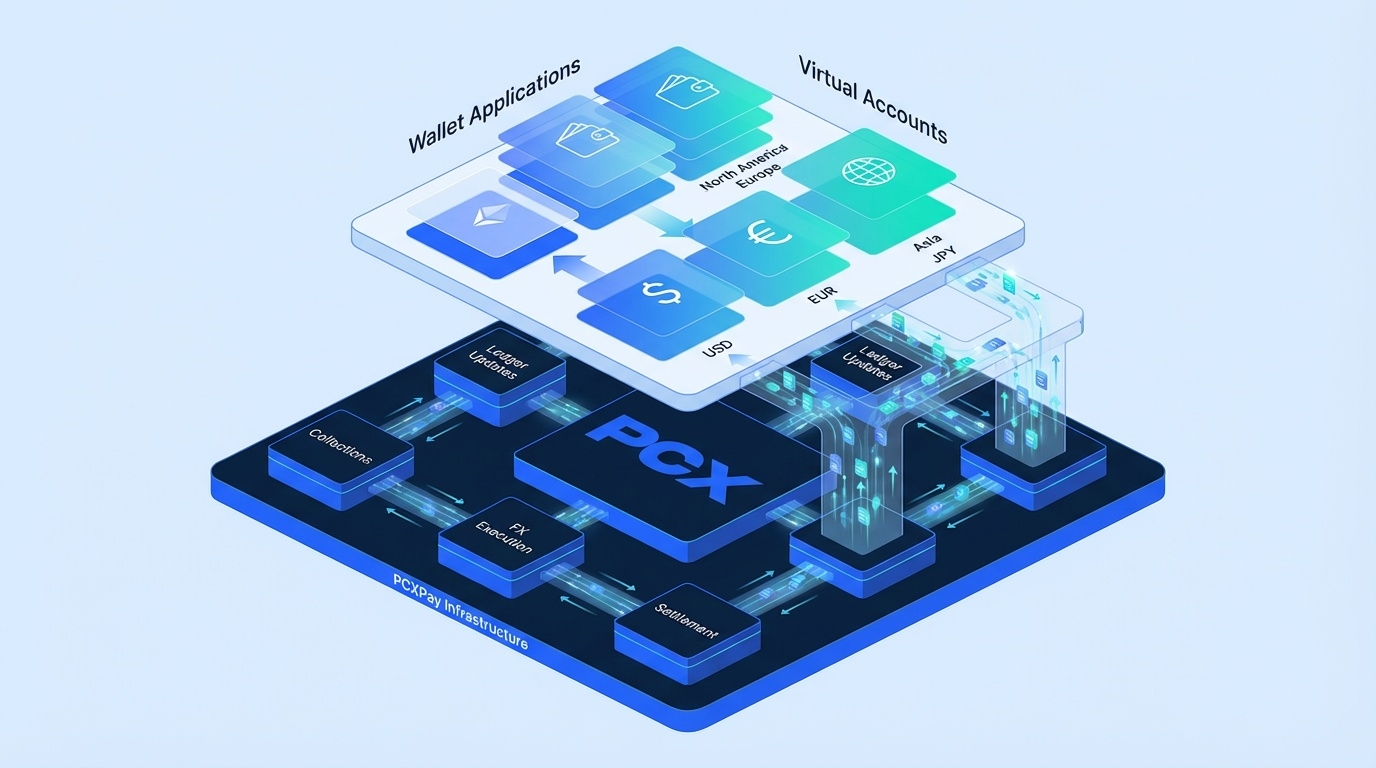
Virtual accounts must integrate directly with wallet balances. Settlement flows must align with ledger entries. Currency conversion must reflect transparently. Compliance processes must run without slowing transactions unnecessarily.
This requires coordinated infrastructure, not isolated integrations.
At PCXPay, wallet and virtual account systems are built as part of a unified embedded finance architecture. Collections, FX execution, settlement, reconciliation, and ledger updates operate together rather than independently.
This ensures that wallet balances remain accurate even as transaction volumes scale across markets.
What This Enables at Scale
A fintech app can expand into new regions without rebuilding backend systems.
A marketplace can support thousands of simultaneous wallet transfers without reconciliation breakdown.
A cross border platform can maintain balance accuracy across currencies without operational stress.
Users experience seamless transactions.
Teams experience stable operations.
Leadership experiences controlled growth rather than reactive troubleshooting.
Wallets fail not because the concept is flawed, but because infrastructure was not designed for scale.
With PCXPay, wallet and virtual account infrastructure is engineered to support high volume, multi currency, cross border environments without sacrificing accuracy or predictability.
When infrastructure is stable, user experience remains simple.
And in embedded finance, simplicity at the surface is only possible when complexity is managed intelligently underneath.